
Category: Uncategorized
conceptional work
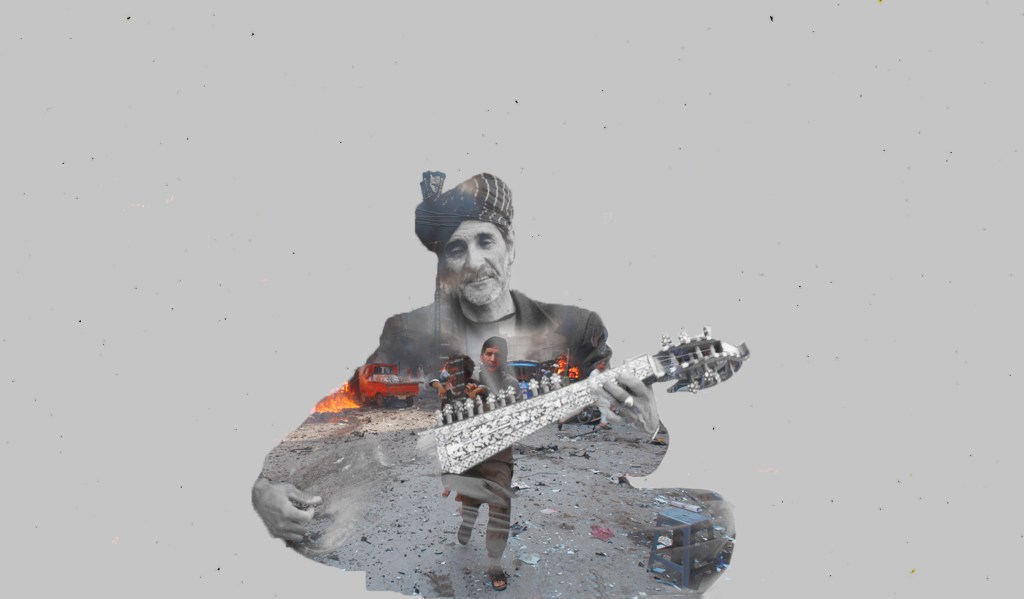
Musical Instruments of Pakistan
When it comes to music, Pakistan can be considered as a musically diverse nation. The country has been blessed with musicians who can perform in every single genre whether it is the soulful Ghazal or the head banging metal. Pakistani musicians are not appreciated only in their home country but all across the globe from legends like Nusrat Fateh Ali Khan to contemporary musicians like Atif Aslam and Strings.
There has been an aspect when it comes to Pakistani music that has not been completely discovered or many people do not know about. That is musical instruments being made in Pakistan. People have often seen these instruments but due to the lack of works produced with this regard, they are unaware of what they are called or cannot easily identify them.
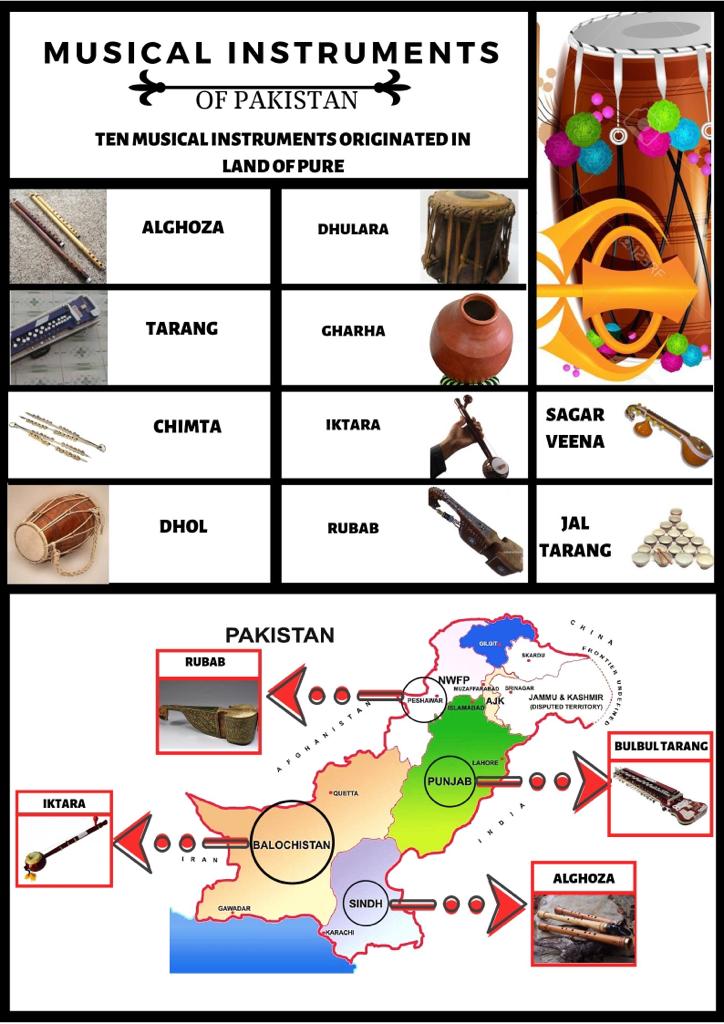
Here, we look at 10 musical instruments that have been originated in the land of pure.
1- ) Alghoza
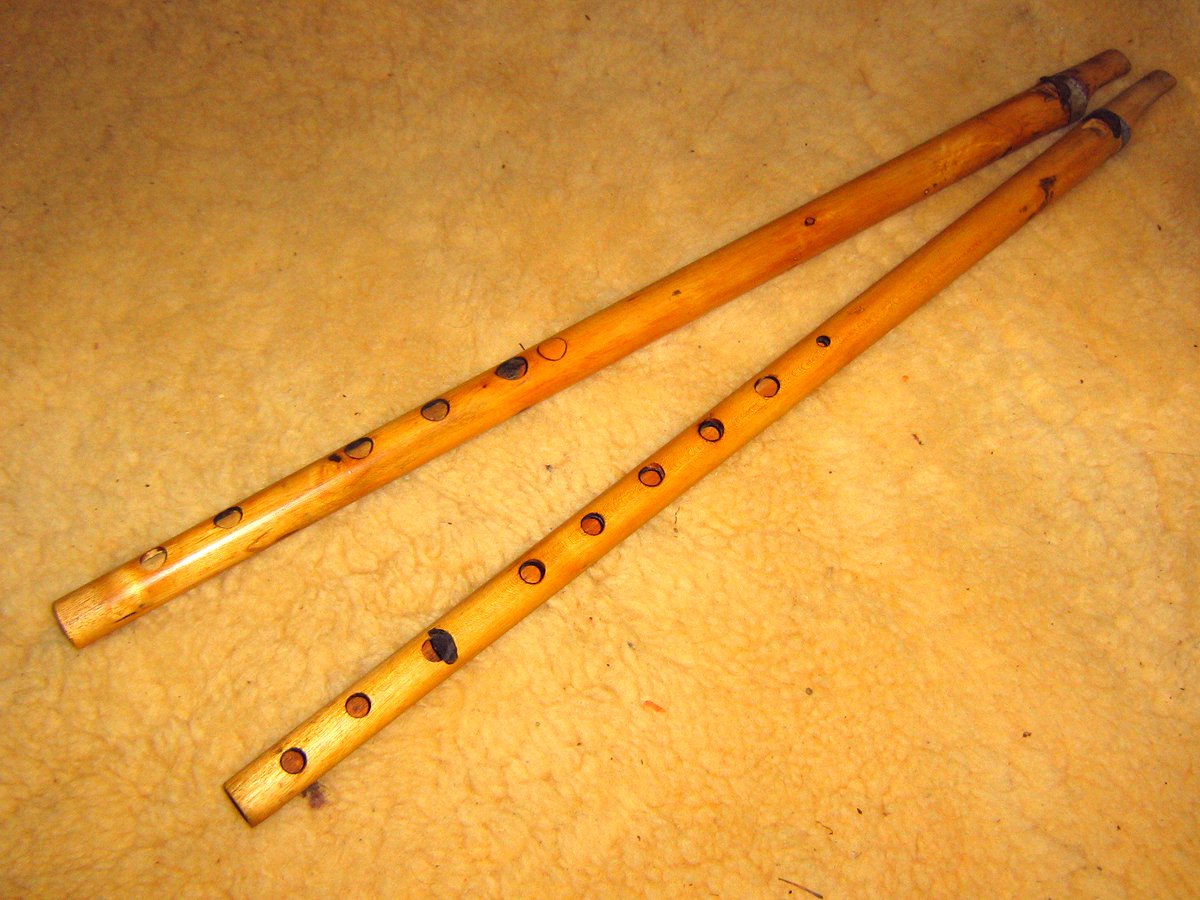
The Alghoza is an instrument which originated in the province of Sindh. It is also referred to as Pava or Beenu. In Balochistan, it is called the Donelli.
The Alghoza consists of two or more flutes that have the same size and width. One of them is used to produce drone and the other for melody.
In Balochistan, where it is referred to as the Donelli, it is suggested that it should be played as a separate instrument. However it is often played with stringed instruments as well.
Today it is popular in other parts of Pakistan as well.
The Alghoza is composed in Bheem Pilasi, which is a raga that depicts a romantic expression.
2- ) Bulbul Tarang
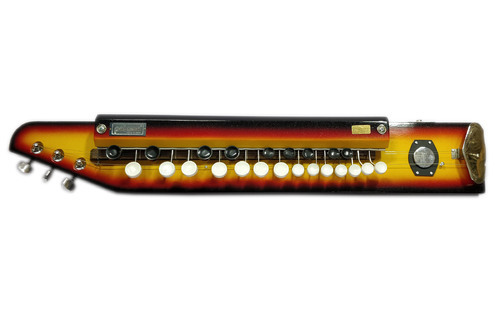
The Bulbul Tarang is derived from the Japanese instrument Taishogoto. It has its origins in Pakistani Punjab.
It has two sets of strings. One is for drone and one is for melody. The strings are run over a fret board whereas and the keys above it resemble the shape of keys on a typewriter.
It is popular in Baluchistan as well. It is almost about one meter in length.
The sound that the Bulbul Tarang indicates is a bright and strong metallic one.
3- ) Chimta
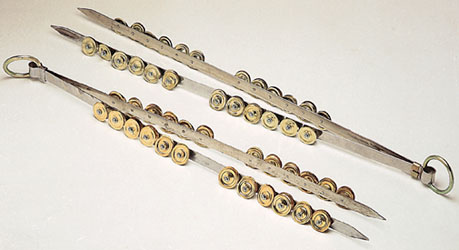
The chimta which means tongs is a percussion instrument that is popular in Punjab and Sindh.
It is commonly used in Punjabi folk songs and the Punjabi form of music known as Bhangra.
The chimta is a pair of tongs and they are one meter in length.
The tongs are hit against each other which results in slapping a large iron ring at the bottom of the tongs and a sound is produced.
The late musician Alam Lohar and his son Arif Lohar are among the most prominent Pakistani musicians to play with the Chimta.
The Chimta also featured in Arif Lohar’s music video of the song Jugni.
4- ) Dhol
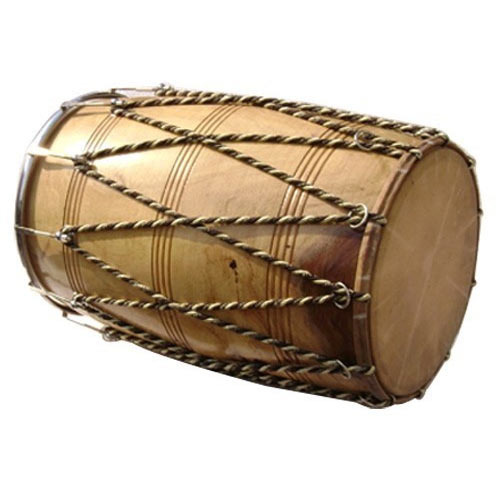
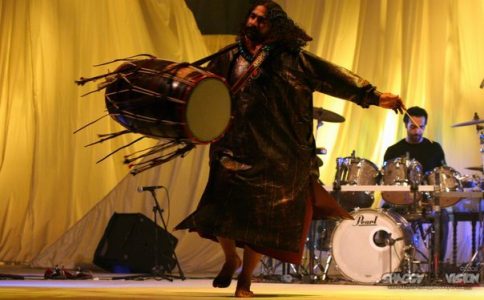
The Dhol is a form of drum that is popular in South Asia including Pakistan.
It is a two-headed piece of wood that is hollowed out which is covered with goat skin. It is beaten with sticks that are made of wood but can be beaten by hand as well.
In Pashtun areas of Pakistan, it is also played along with Attan which is a poular Pashtun dance.
The Pakistani rock band Overload is also known for using the dhol in their songs as well as in concerts. The Dhol plays a prominent role in their song Batti as well as many other songs.
5- ) Dhulara
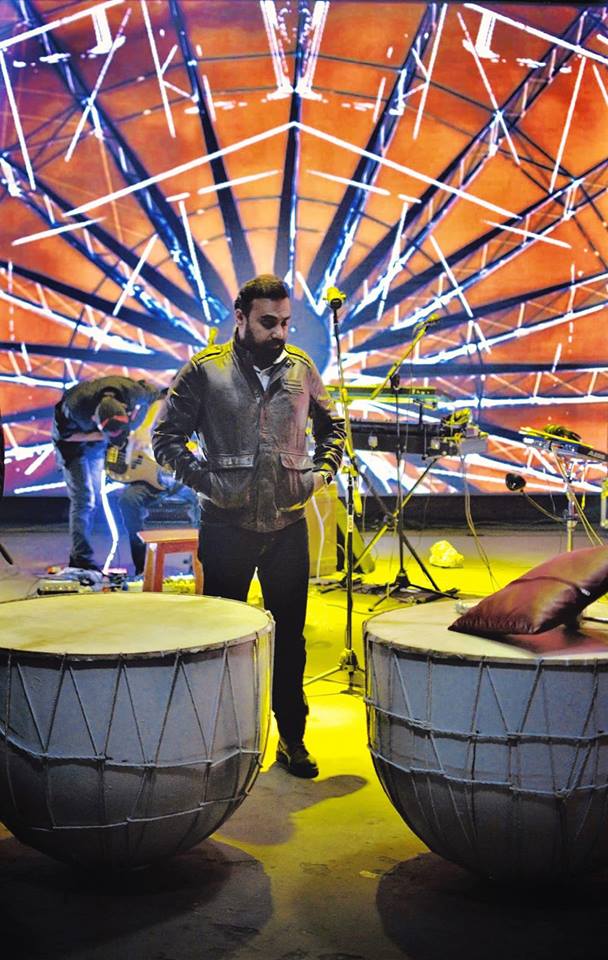
The 36 inches in diameter form of a drum which is known as Dhulara was created recently in 2019.
It is inspired from different versions of drums particularly the Dhol. Zulfiqar Jabbar Khan, music producer of Nescafe Basement and members of the band Call and Entity Paradigm is the visionary behind the Dhulara. Syed Umair Hussain Lahooti and other people also played a part in the creation of the Dhulara.
It can be played by hands or with sticks or mallets.
Dhulara made its debut in Season 5 of Nescafe Basement where it was featured in the song Resistance by Abdullah Siddiqui.
6- ) Gharha
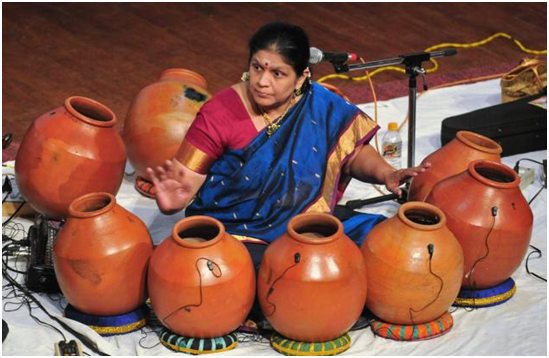
The Gharha or Ghara is an instrument that is popular in Punjab. It is often played in Punjabi folk songs.
It is played with putting rings on fingers and with both hands. It produces a rhythm through its open mouth as well.
The Gharha is also used to store drinking water.
The Gharha is referred to as Dilu in Sindh, Mangay in Khyber Pakhtunkhwa and Noot in the Kashmir region.
7- ) Iktara
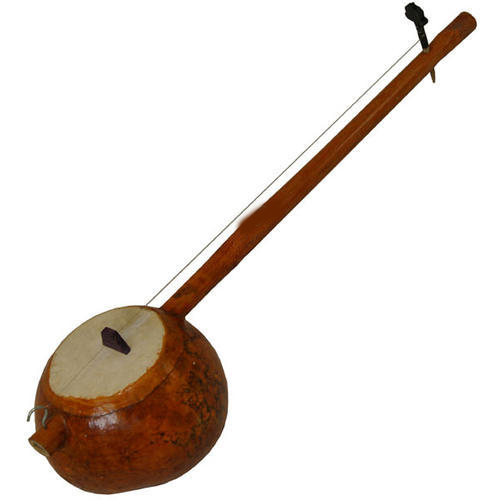
The instrument is derived from the words Ik which means one and Tara which means wire. It was mostly used in religious songs.
It has a thing and long stem and has a small bowl covered with skin. It is played in a vertical position.
The Iktara was not meant for solo performance but legend has it due to a miserable love affair, Saeen Marna, a musician from Balochistan was the first musician to use it solo.
8- ) Jal Tarang
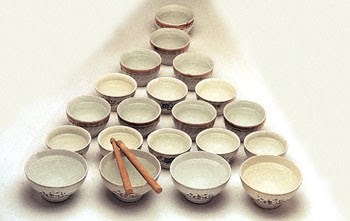
The Jal Tarang is a percussion instrument which consists of 11 to 14 china bowls with different sizes and height.
All of the bowls are filled with a certain amount of water. The bowls are placed in a semicircular position.
The player sits in the middle and uses two small sticks to strike the surface of the bowls which produces a sound.
9- ) Rubab
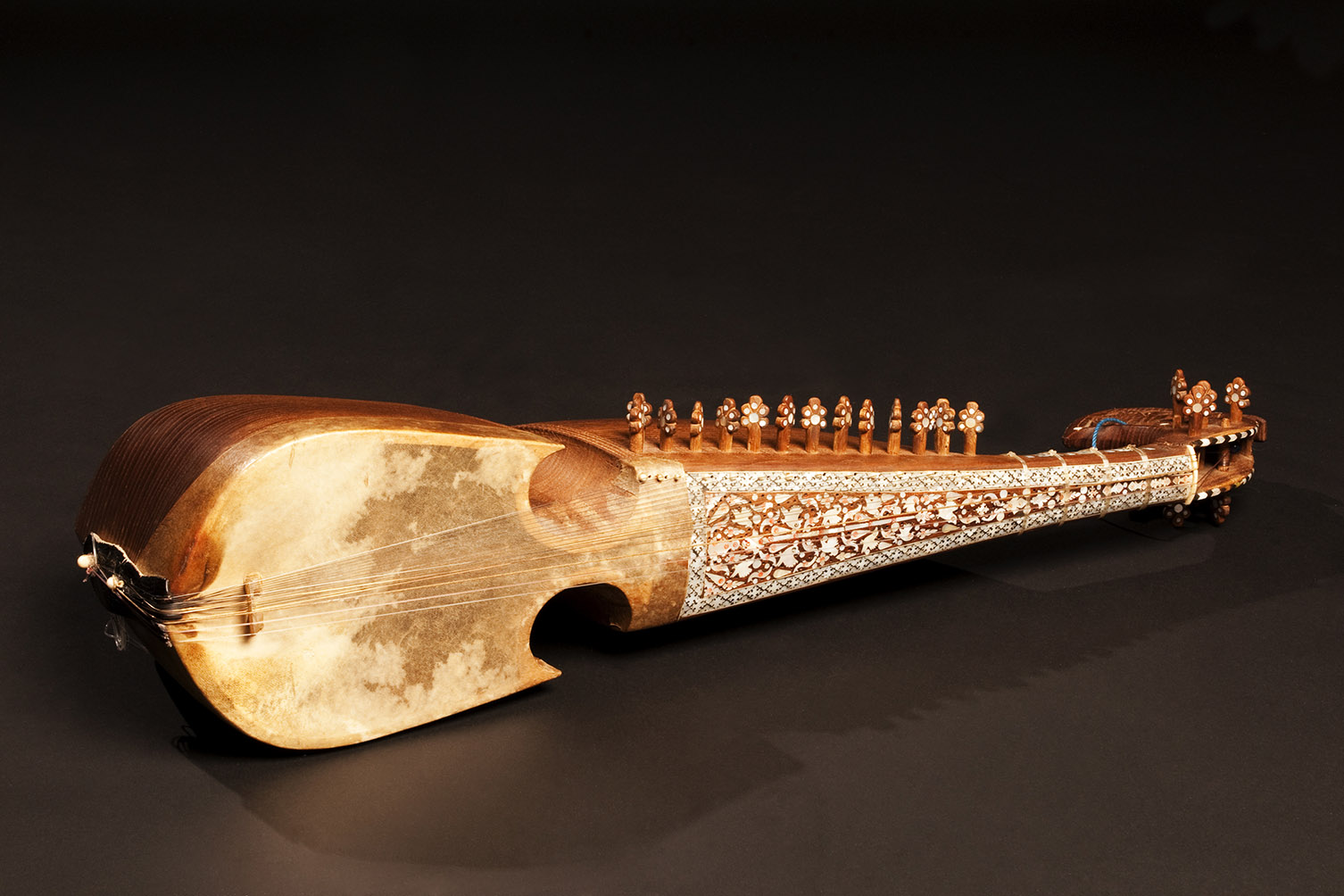
The Rubab is a popular instrument in North-Western and South-Western Pakistan.
It is a string instrument. The Rubab has a lute which is small necked and its body is carved out of a single piece of wood.
Khumariyaan, a Pakistani folk rock band from Peshawar often use the Rubab in their songs including their appearances in the popular Pakistani music series Coke Studio.
10- ) Sagar Veena
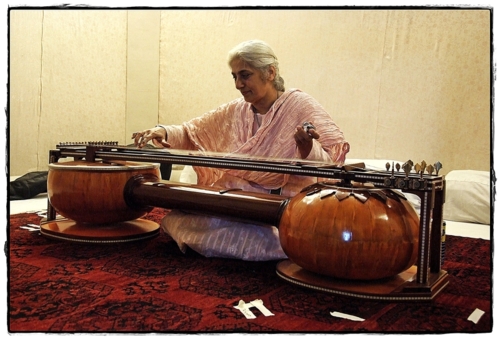
The Sagar Veena is a plucked stringed instrument that was invented in Pakistan post-independence.
It does not consist of any frets and is played with a slide.
The instrument was invented by Raza Kazim, a prominent Pakistani lawyer.
Her daughter Zahra Kazim who is the mother of Ali Noor and Ali Hamza of the popular Pakistani rock band Noori is the only person in the world to play the instrument ever since its creation.
The Sagar Veena was also featured in the Coke Studio song Hor Hi Veevan No by Noori where Zahra Kazim played the instrument.
 pakmusicarena